How Much Does an Air Ambulance Cost in Mexico? Real 2026 Prices
When a family needs an air ambulance, it is almost always the first time they have ever hired one — and the question nobody answers clearly is how much it costs. This guide puts real numbers on the table: price ranges by type of transfer, what a serious quote should include (and what it should not leave out), and how to pay only for what the mission actually requires.
The short answer: a domestic aeromedical transfer within Mexico typically costs between $8,000 and $20,000 USD, and a Mexico–United States transfer between $23,100 and $47,250 USD, depending on distance, patient condition, and the medical equipment required. Long missions — South America, Canada, multi-stop routes — can exceed $70,000 USD. Below we explain where each figure comes from.
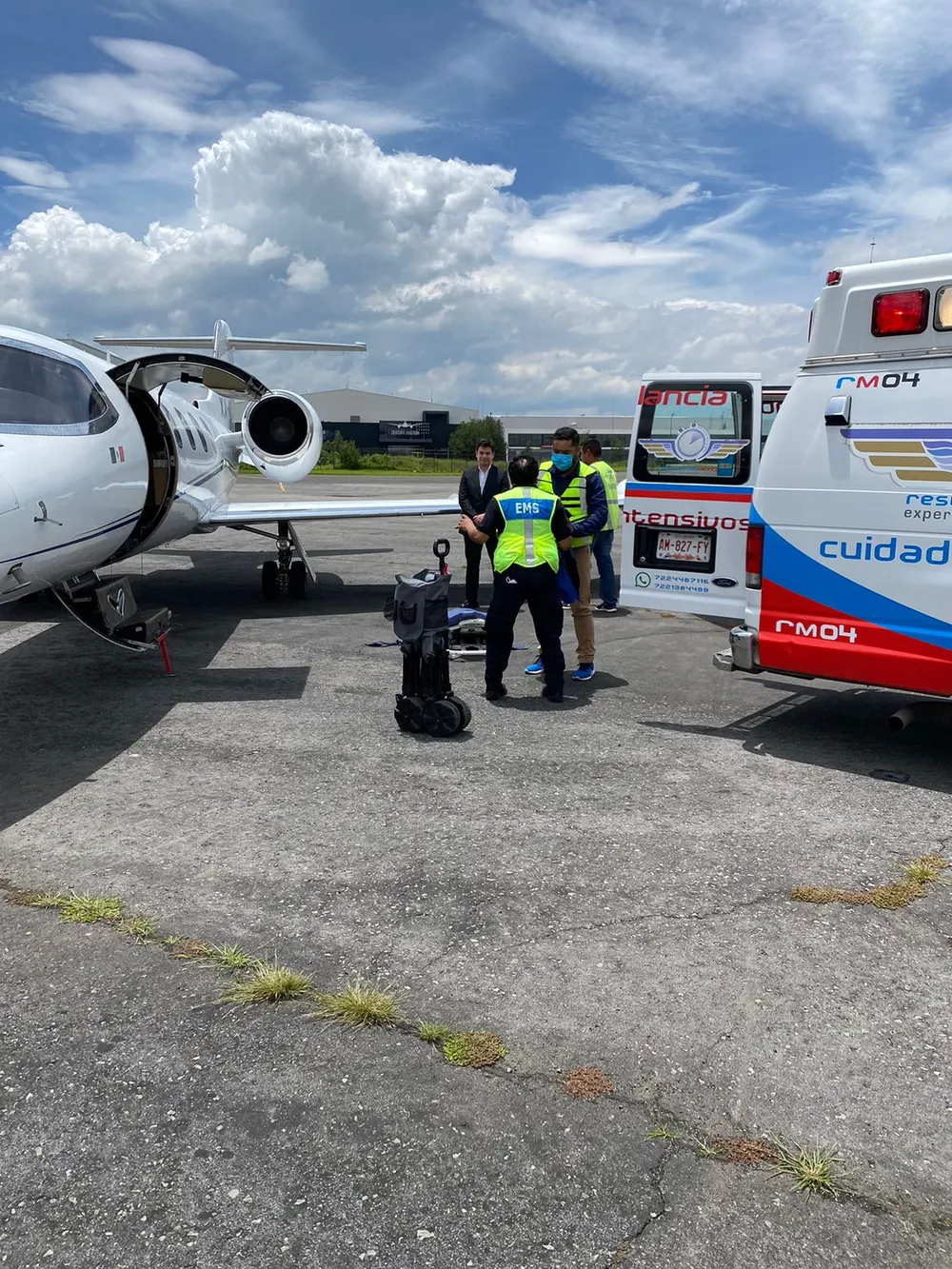
Price ranges by type of transfer
Every mission is quoted individually, but these reference ranges let you size the expense before requesting a quote:
| Type of transfer | Example route | Typical range (USD) |
|---|---|---|
| Short domestic | Toluca → Guadalajara / Monterrey | $8,000 – $14,000 |
| Medium domestic | Toluca → Cancún / Tijuana / Mérida | $12,000 – $20,000 |
| Mexico → US border region | Toluca → Houston / San Antonio / San Diego | $23,100 – $36,750 |
| Mexico → US interior | Toluca → Miami / Dallas / Los Angeles | $26,250 – $47,250 |
| Long range | South America, Canada, deep Caribbean | $42,000 – $78,750+ |
Two caveats about these figures. First, they are market ranges for a dedicated air ambulance jet with a medical crew — not for a commercial airline seat with a medical escort, which is a different product (and far cheaper when the patient is stable). Second, be wary of quotes far below the range: in medical aviation, an abnormally low price almost always means an aircraft without a real medical configuration, an operator without current certification, or hidden costs that surface later.
Need the transfer today? We give you a firm price in minutes and activate immediately, 24/7. See our air ambulance service from Toluca or message us on WhatsApp at +52 444 234 89 42.
What drives the price
Distance and flight time. This is the heaviest factor. An air ambulance is priced largely per flight hour, and that includes positioning the aircraft (the empty leg to reach the patient) and the return to base. That is why a transfer flown from a Toluca base to western Mexico costs less than the same mission operated by an aircraft coming from the border.
The patient's condition. Moving a stable patient is not the same as moving a critical one. An ICU-level patient requires more equipment (ventilator, infusion pumps, invasive monitoring), more personnel (an intensive care physician in addition to the flight nurse and paramedic), and more oxygen on board. As a market reference, adding a specialist physician to the crew can add several thousand dollars to the mission.
The aircraft. For short distances and primary evacuation, a medicalized helicopter does the job; for inter-hospital transfers beyond 300 km, an air ambulance jet is faster, more stable, and — on long routes — cheaper per kilometer. At Numen Aviation the primary platform is the Learjet 35: a pressurized cabin that maintains near sea-level oxygen (critical for cardiac and post-surgical patients) and a range of more than 3,700 km nonstop, covering nearly any Mexico–US route without a fuel stop — and every stop avoided is time and money saved.
Ground logistics and permits. A serious quote is bed-to-bed: it includes the ground ambulance at origin and destination, coordination with both hospitals and, on international transfers, flight permits, customs, and immigration for the patient and their companions. In Mexico, AFAC paperwork and airport coordination are the operator's job — you should not have to manage anything.
Urgency. An immediate activation (our 4-hour protocol) means mobilizing crew and aircraft outside of schedule. If the transfer can be planned days in advance, there is room to optimize routing and cost — sometimes even using another mission's positioning leg.
What the quote must include (checklist)
Before paying, confirm the quote includes in writing: the specific aircraft and its medical configuration; the detailed medical crew (flight nurse, paramedic, physician if applicable); in-flight oxygen and medication; ground ambulances at both ends; permits, handling, and airport fees; allowed companions (the Learjet 35 normally accommodates one family member); and the tax breakdown. If any of this appears as "not included," ask for it integrated — last-minute surprises in medical aviation are expensive.
Does insurance cover it?
It depends on the product. Many major medical policies in Mexico cover aeromedical transfer when it is medically necessary and pre-authorized, and several international travel policies include medical evacuation with limits from $50,000 to $1,000,000 USD. In practice, insurers usually reimburse against invoices rather than paying directly, so the family typically fronts the cost. We deliver a complete file — invoice, medical flight report, logs — for reimbursement. If the patient has no coverage, the cost is out of pocket; that is why it pays to get at least one quote from a Mexico-based provider: positioning an aircraft from the US can double the bill.
Why quote from Toluca (MMTO)
The base matters more than it seems. An aircraft based at Toluca International Airport sits 40 minutes from the Santa Fe–Mexico City hospital corridor, with direct ramp access and none of the congestion of the AICM. For central Mexico, that means fewer positioning hours — and lower cost — than activating an aircraft from Monterrey, the border, or the United States.
Frequently asked questions
How much is an air ambulance from Toluca to Houston? As a reference, between $23,100 and $36,750 USD for a stable-to-serious patient on a dedicated air ambulance jet, bed-to-bed. The final figure depends on the patient's condition and availability.
Can family fly with the patient? Yes. The Learjet 35 normally carries one companion at no extra cost; depending on configuration and weight, sometimes two.
How fast can you take off? Under our standard protocol, wheels up in roughly 4 hours from confirmation — including medical crew, oxygen, permits, and coordinated ground ambulances.
Is a commercial flight with a medical escort cheaper? For stable patients who can travel seated or on a commercial stretcher, yes — it can cost a fraction. But it requires airlines that allow it, long coordination lead times, and it is not an option for critical patients. We will tell you honestly when that alternative makes sense.
A medical emergency leaves no time to compare ten quotes. Save this number: +52 444 234 89 42 (WhatsApp, 24/7). Our operations coordinator gives you a firm, honest price in minutes, and we activate immediately. Learn more about our air ambulance service from Toluca.
Ready to fly?
Quotes in under 30 minutes. Operations 24/7 from MMTO Toluca.
Request a quote