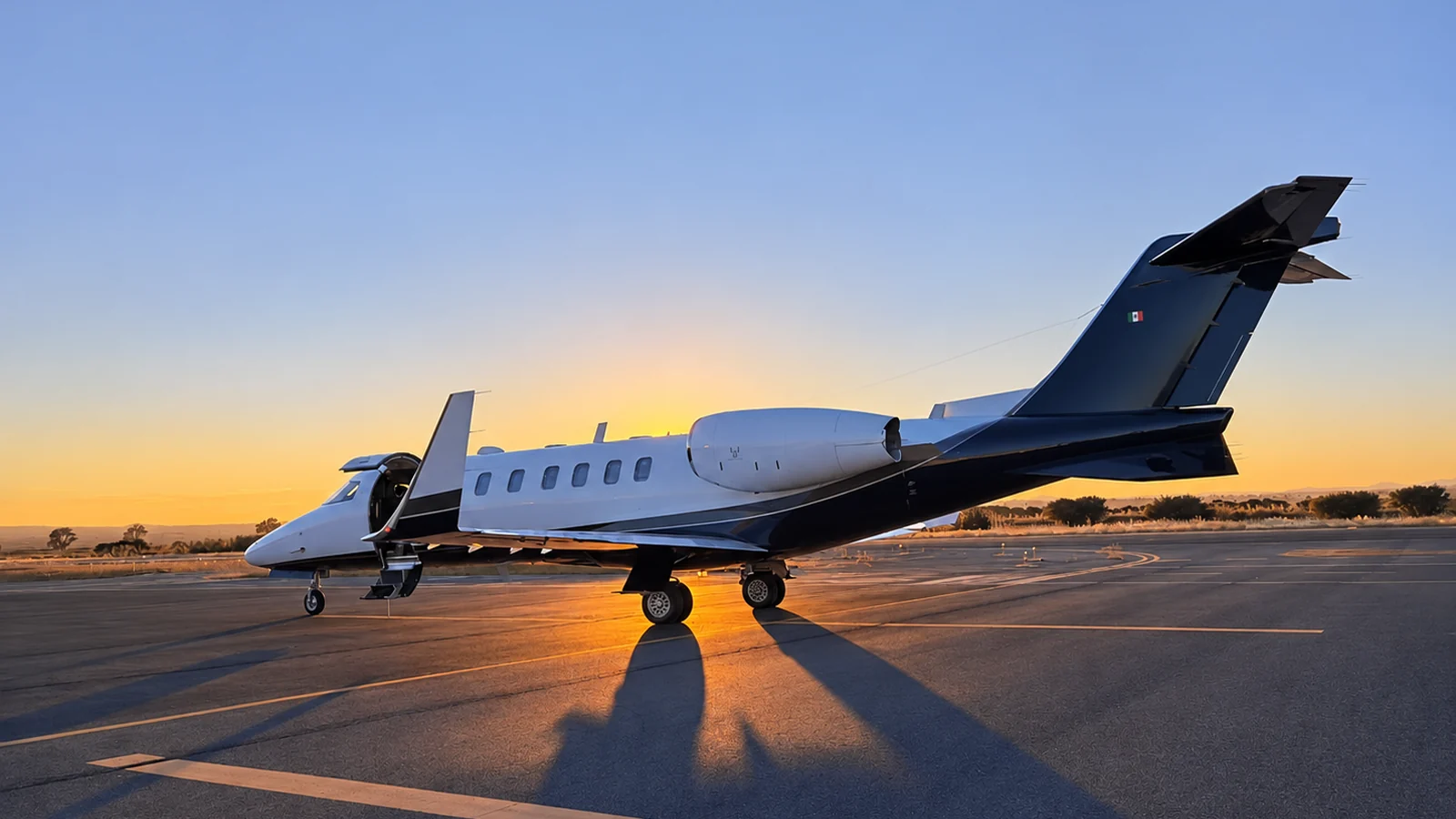
Private Flights with Pets
No hold.
No crate.
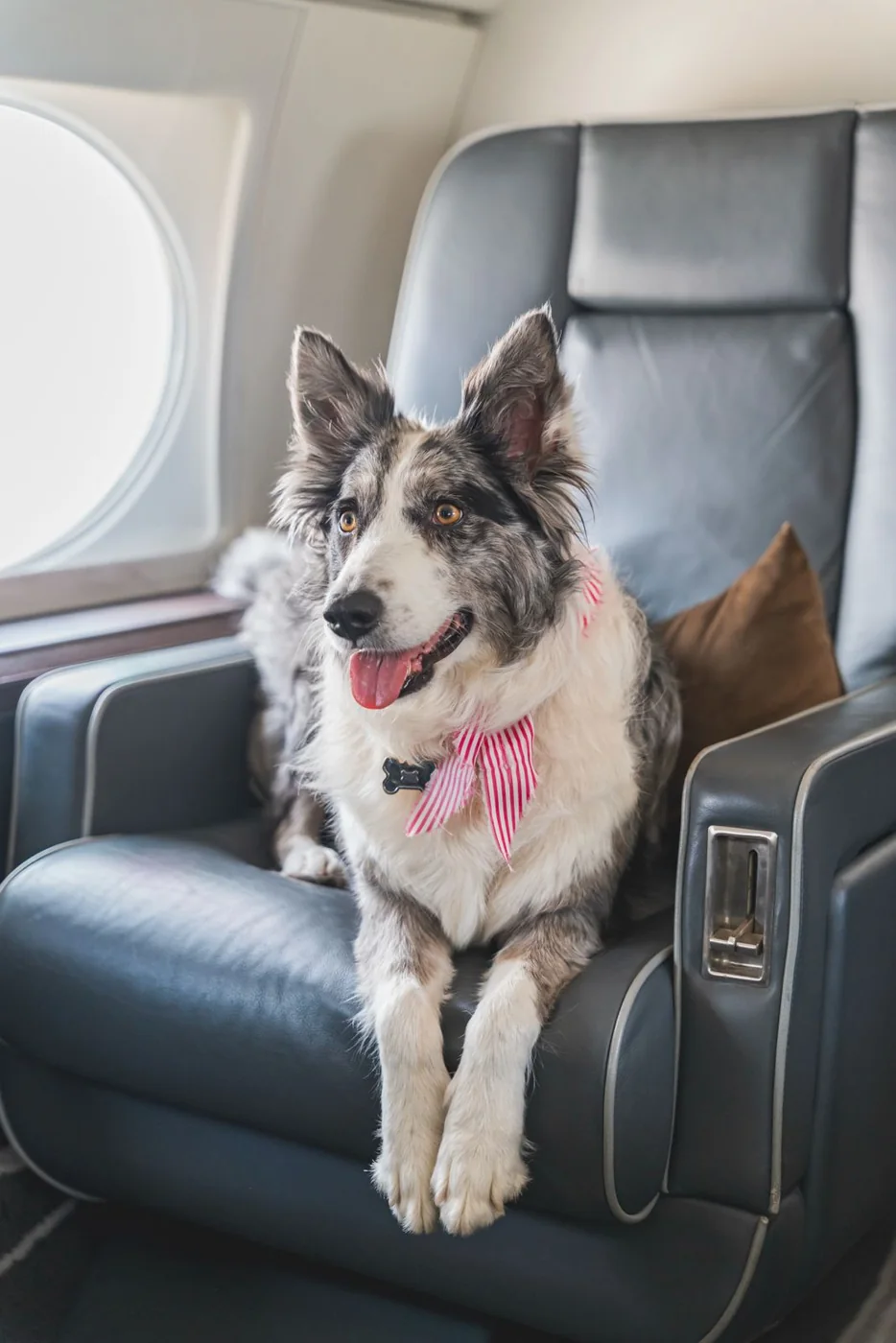
In the next seat.
On a private jet your dog or cat travels in the cabin, with you. What decides whether it can fly is not its size: it is operator approval and the paperwork required by the country you land in. We handle both.
The difference
Commercial airline vs. private jet.
| Commercial airline | Private jet | |
|---|---|---|
| Where it travels | In cabin only if small and it fits under the seat; otherwise hold or cargo | In the cabin with you, whatever its size, if the operator approves |
| Weight | Strict cabin limit, typically under 10 kg including the carrier | No airline cap; it counts toward the aircraft's total weight |
| Carrier | Mandatory | Set by the operator; often a short leash for takeoff and landing is enough |
| Capacity | Few pets per flight | As many as the operator approves for your party |
| Terminal | Counter, queues and screening in a commercial terminal | Private terminal (FBO), direct ramp access |
Requirements
What you need, by destination.
The essentials, as of September 2026. Health requirements change often, especially while the screwworm alert is in force: we confirm them when quoting each flight.
Within Mexico
No Senasica procedure applies. The operator may ask for health paperwork, so travel with an up-to-date vaccination record.
Mexico → United States
Dogs: at least 6 months old, microchipped, CDC Dog Import Form receipt and a screwworm-free certificate issued within the previous 5 days. No Senasica export certificate is needed. Cats do not need the CDC form.
United States → Mexico
Dogs: a screwworm-free inspection document signed by a USDA-accredited vet within the previous 5 days. On arrival Senasica performs a physical inspection. Cats are exempt.
For the Caribbean, Central America and the rest of the world, and for the full detail with official sources, see the 2026 requirements guide.
On board
A seat, not a crate.
For takeoff and landing it travels on a short leash or in a carrier, depending on the operator's rules. In cruise, wherever you want it. No hold, no separation and no commercial terminal: from the car to the FBO and from the FBO to the aircraft.
What we handle
Before you confirm.
- 01
Operator approval
The final call on carrying a pet belongs to the aircraft operator. We confirm it in writing before you book, not after.
- 02
Weight and balance
A 40 kg dog counts toward weight and balance, especially on a light jet departing Toluca at 2,580 m elevation. That is why we ask for the exact weight when quoting.
- 03
The right aircraft
For large dogs or several animals a taller cabin, such as the Hawker 800, beats a low-cabin Learjet.
- 04
Charges and paperwork
We tell you upfront which cleaning policy applies to your flight and which documents the destination needs, with their validity windows.
One note we always repeat: do not sedate your pet without your veterinarian's instruction. The American Veterinary Medical Association advises against sedating animals for flight because it affects their breathing and balance.
Tell us who travels with you.
Species, breed, weight and how many pets are travelling. With that we confirm operator and aircraft, and tell you which documents you need.
Request a Quote on WhatsApp